Make a miniature pride parade to celebrate the LGBTQI+ community!
Before you start
- Create an example peg protester (see below ‘miniature pride parade’ section) to show your group
- Flipchart paper and pens
- Pegs (ideally the kind with round heads, around 3 per person)
- Clay
- Wool (lots of colours if possible)
- Scrap fabric
- Cocktail sticks
- Pipe cleaners (optional)
- Scrap paper/cardboard (ideally multiple colours)
- Coloured pens or pencils
What to do
What is Pride?
Ask if young people know what pride is and when it began. Write down ideas on the flipchart and then explain anything they miss below:
Pride parades began in America in the early 1970’s and have been emulated across the world in the years since. The parades represented an opportunity for LGBTQI+ people to protest for rights that had been denied to them: rights to be proud of who they are and freely express their love, but also the right for equal access to work, housing, healthcare and legal status for their relationships. They also sought to fight against the idea that LGBTQI+ people should be ashamed of their sexual orientation or how they expressed their gender. Homosexuality was still classified as a mental illness in the US when the parades began, and many religious organisations saw it as being a sin, consequently many LGBTQI+ people hid who they were from those around them.

Being yourself
Ask young people if they have ever had to hide their true self from those around them. If so, how did it make you feel and act? If not, think about what it would be like to have to hide your true self from everyone – your family, friends, other people you know. How would it make you feel? How would it make you act?
Ask why they think Pride parades are important to LGBTQI+ people in the light of this. Write down ideas and explain anything they miss from the below sentence:
Pride parades are an opportunity for LGBTQI+ activists to show those around them that they have nothing to be ashamed of and that they can come together as a community, or network of communities, to celebrate who they are.

Party or protest?
Ask young people whether they think Pride is a party or a protest? Can it be both at the same time? Ask if they think it is a positive thing that now in the UK businesses take part in pride marches. Why? You could guide them towards the below if they are stuck:
In the UK massive steps have been made towards winning legal equality for LGBTQI+ people in the last forty years, and pride parades have become widely accepted and seen as an opportunity for businesses and elements of government to show that they support LGBTQI+ rights. This is major progress from a world where you could loose your job or go to prison for being gay, but critics argue that participation in pride celebrations can be “pinkwashing” by organisations that do not then uphold the principles that gave birth to Pride in their day to day activities.
Explain that there are still many countries where LGBTQI+ people have to protest to get the same rights as everyone else and those who participate in protests or pride parades can place themselves at risk from those around them. In some countries it is still illegal to be openly gay, and it can be very dangerous to take part in something like pride that openly and publicly supports and celebrates LGBTQI+ people.

Miniature pride celebration
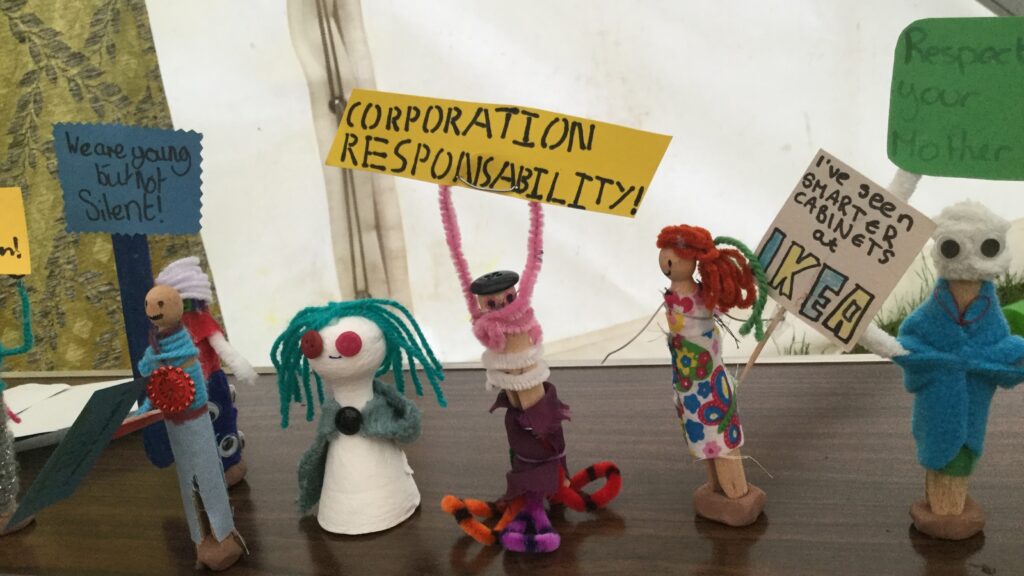
Give out materials and explain that young people are going to make the people in a pride parade out of pegs. They can wrap them with wool, fabric or pipe cleaners, draw on a face, add wool or pipe cleaner hair etc. Show them your example and let them get creative! Explain they will need to stick the peg in a small piece of clay so it can stand.
Once participants are starting to finish their first doll, say they will need to create a placard for their doll. Ask them to think about LGBTQ+ issues that matter to them and write them on the flipchart. Then ask young people to think of a punchy slogan that gets one of these idea across. Using their slogan, they should make placards out of paper/carboard, pens and cocktail sticks and attach them to their peg doll. Have each participant make a few peg dolls, and then they can arrange them all into a parade.
Extension
If there’s time you could create the surroundings too – put down a big sheet of paper and draw out the road markings. Sometimes at pride parades around the world there are special things on the road such as rainbow zebra crossings – add these. You could even create buildings to hang flags from or draw murals on to.
You could also get young people to role play the pride parade, moving their peg dolls and taking turns to lead chants/songs.