Participants will learn about the history of the clenched fist symbol and how to draw it. Then they use this knowledge to create a placard about an issue that matters to them.
Before you start
- Either print the resource document (ideally on A3 paper or multiple copies if your group is bigger than 10) or have a projector or screen that is big enough for everyone to see
- A piece of cardboard around A4 size with at least one plain side (you could stick paper to it if necessary) per person
- Markers
- Sticks for holding the placard (optional)
- Gaffer tape for sticking the stick to the placard (optional)
What to do
Images to Icons – the clenched, raised fist:
Show young people image 1:

Ask if they have seen it before and if so where. Do they know what it symbolises? Hopefully participants will come up with at least one protest movement, but if not you could give clues/ask what they think it might symbolise from looking at the image.
Explain that the clench fist has been used as a symbol of resistance and unity throughout history, by a variety of communities and groups, as an act of rebellion against oppression. It is a potent symbol with an exciting and inspiring history.
Images to Icons – the journey:
Show image 2:
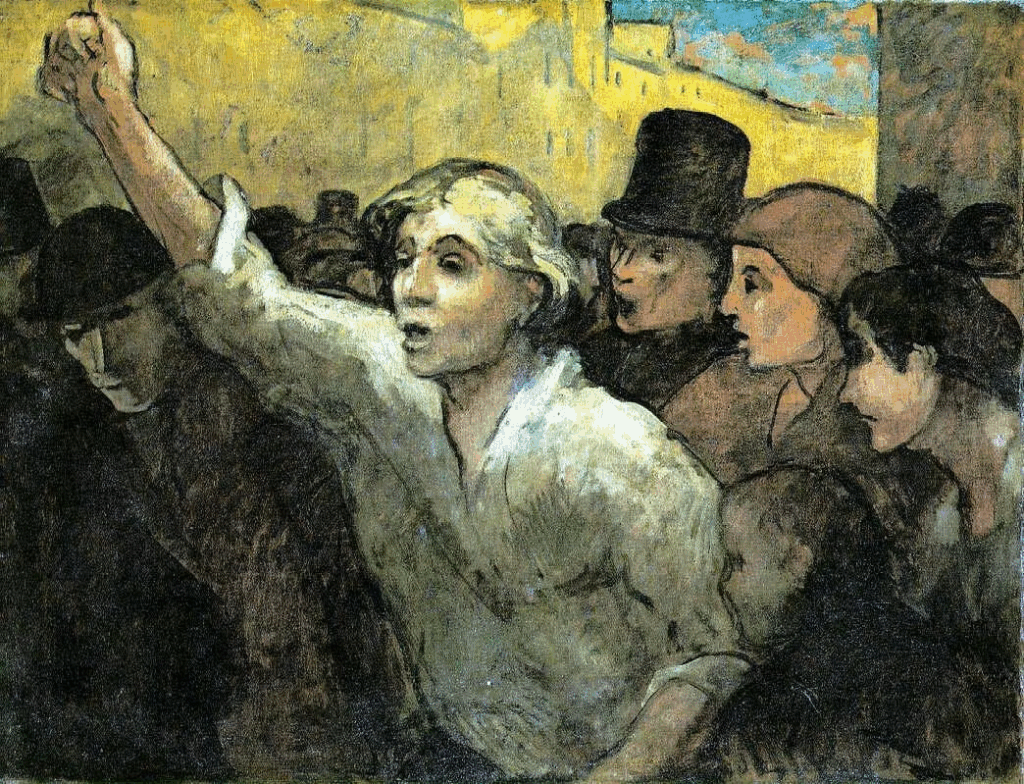
Explain that this painting is thought to be inspiration for the clenched fist symbol. Ask young people when they think this could be from/what they think is happening. Give the name of the artist, Honoré Daumier, as a clue if no one guesses correctly.
Tell young people this was likely inspired by the French revolution of 1848. Daumier used the clenched fist as as symbol of the people’s “strength, determination and will to fight.”
Show image 3:
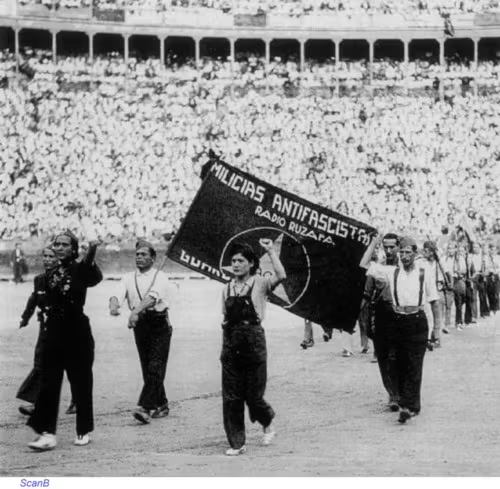
Ask young people where/when they think this image could be from. If they are stuck ask them to think about the language on the banner, and if that doesn’t work give them other clues about Spain e.g they eat Paella, they dance flamenco, the flag is red and yellow.
Explain that this photo is from the Spanish civil war, where Republican militias and international brigades used the raised fist as a symbol of anti-fascism against the dictator Franco. It was a sign of unity against the oppressor.
Show image 4:
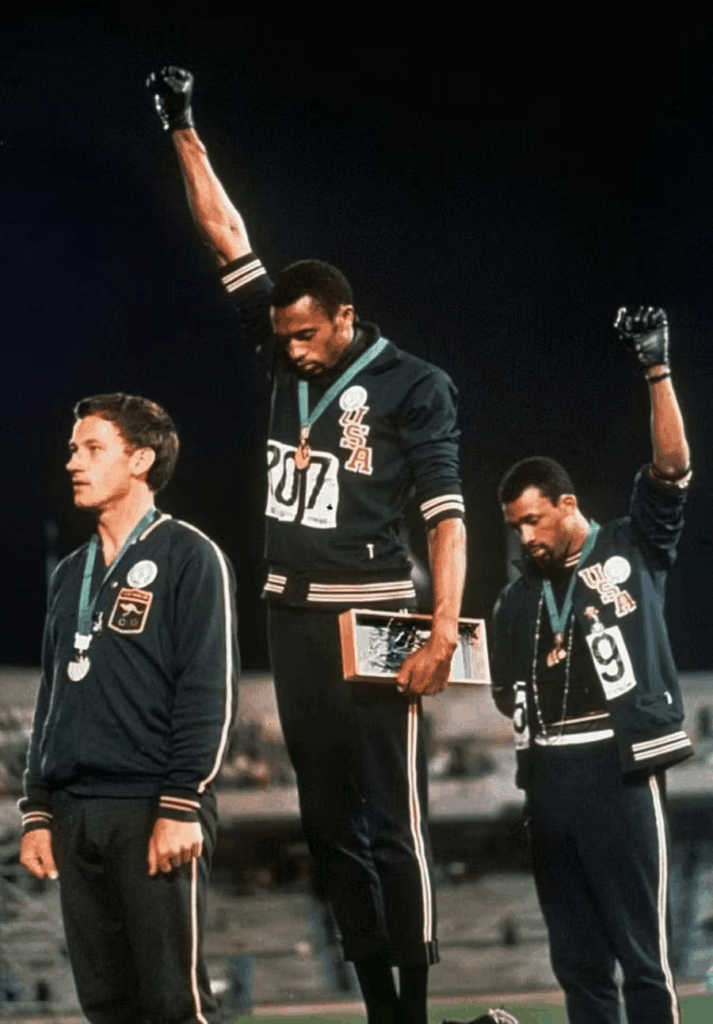
Ask participants where/when they think this photo is from. Which sporting event? Around what time? What do you think the people in the image could be using the clenched fist as a symbol of? If they don’t get it say that the people with raised fists are American and that this was in the olympics in the 60s as a clue.
Explain that this photo is from the Mexico olympics of 1968, which were held just after the assassination or Martin Luther King. The civil rights movement, a protest movement demanding more rights for black people in the US, was well underway, and Tommie Smith and John Carlos raised their fists when they won gold and bronze in the 200m to protest racism and injustice.
Show image 5, image 6, image 7 and image 8:


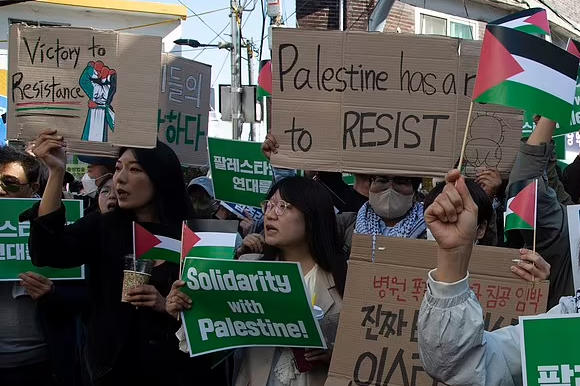
Explain that these are all from more recent protests in the last 10 years. Ask participants what they think they are all about (5 is LGBT safety especially after the Orlando shooting in 2016, 6 is the women’s march in 2017 after Trump was elected, 7 is Black Lives Matter in 2020 after the killing of George Floyd and 8 is a 2023 protest in South Korea about Israel’s bombardment of Palestine).
Images to Icons – drawing the fist:
Now young people understand its history, they must learn how to draw the fist so they can use the symbol when making placards/posters. You could either show the video below or show/give out image 1 to copy.
Making a placard
Now young people can make a placard using the clenched fist symbol. They can choose a cause that matters to them, or if you are going to a demonstration or pride march as a group soon you could all focus on the issue of that march. Discuss other symbols you might combine with the clenched fist to represent specific struggles (e.g the rainbow, the women’s symbol, the trans symbol, the peace symbol etc). And then give out materials so participants can put these ideas into practice and make their placard.
This activity was inspired by a blog post: A Brief History of the Raised Fist – The Black Sheep Agency