Participants will:
- Discuss issues of concern to them and the influence that politicians and decision-makers have over these issues
- Look in more detail at a campaign planning scenario based on closure of local services, the climate crisis the genocide in Palestine or an issue of their own choice
- Develop a campaign plan to influence politicians and decision-makers • Share and evaluate their campaign plans with others
Participants will develop:
- Knowledge about the influence that politicians and decision-makers have over these key issues such as cuts to local services, climate crisis and the genocide in Palestine
- Understanding how these politicians and decision-makers can themselves be influenced
- Campaign planning skills
- A deeper understanding of how they can effect change, individually and collectively
Materials
Campaign planning scenarios, flipchart paper or large sheets of paper, flipchart/marker/felt-tip pens
What to do
Start by going around the circle and asking the participants what they know about politics and what political influence they think they have. Then ask them to identify an issue they care about and discuss what influence local or national politicians or decision-makers have over this issue. What influence do they feel they have over these politicians and decision-makers? This can be done as a large group or by breaking into smaller groups and feeding back. Through questioning, draw out some of the weaknesses of representative democracy where we rely on others to take decisions for us and emphasise the direct role they can plan in democracy by campaigning and putting pressure on politicians who are supposed to be democratically accountable to those who elected them.
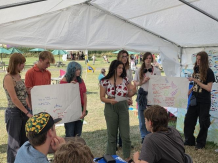
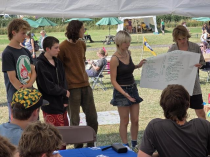
Divide the participants into groups of 5-8 and explain that they are going to chose one of three possible campaign scenarios and that they will then need to read through their scenario carefully and develop a campaign plan to respond to the issues set out in the scenario. Introduce the three issues (cuts to local service provision, genocide in Palestine and the climate crisis) and as a whole group identify the sources of collective power on these issues – how and why might people be mobilised? Let each group pick a scenario, hand out the scenarios, paper, pens and let them get on with planning their campaign. You might want to circulate and offer some tips and suggestions by try to do this through questioning and don’t be tempted to intervene and plan their campaign.
After 30-45min, when the groups feel happy with their campaign plans, each group can take an opportunity to share their plan with the others and take comments and feedback from the wider group.