100 Objects Spanning 100 years project has finished, but we’ve only just started. Thanks everyone who came to our last film night at Cudham. Our last workshop was to celebrate, return and add objects from the project and begin our new ‘Woodcraft Cudham Archives! We looked at film footage from Camp 100 alongside archives films including one still mysterious film from before 1933. We are looking towards the future (as always), building the foundation for our next century.
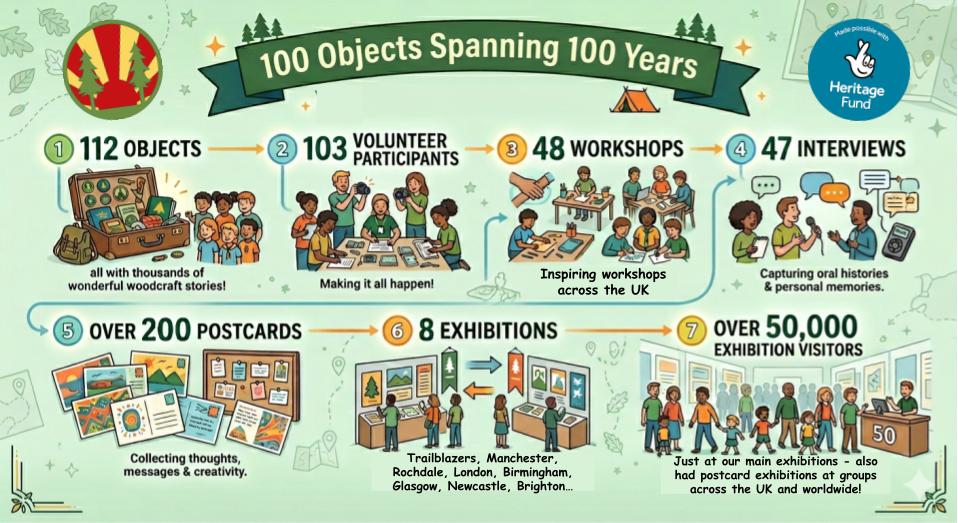
The Project in Numbers
A big thanks to all the dedicated people who have made this project happen. Let’s take a look at what we achieved together:
Explore the Collection: You can still access our full gallery of objects and fabulous resources at our dedicated 100 Objects site. Our archive team will continue to work through the backlog of items now being added to Woodcraft Cudham Archive.
What we’ve learnt
The thoughts and experiences of our participants have shaped our project. At each stage of our project we reflected to learn exactly what will keep our history alive:
Hands on Archives
Young people enjoyed and fully participated in workshops at UCL Special Collections. Access to the archives is limited to protect and conserve our valuable items The act of researching from our primary sources was hard work but some young people got really stuck in. One young member commented they’d spent significant time mastering the Calm archival system to dig out the best stories!
The Power of Conversation
Interviewing felt natural and enjoyed by all, be it group interviews or individual interviews, especially at Camp 100. We found that the best way to relate to our past and present is simply to talk about it, be that young people interviewing other young people or adults.
Making and Doing:
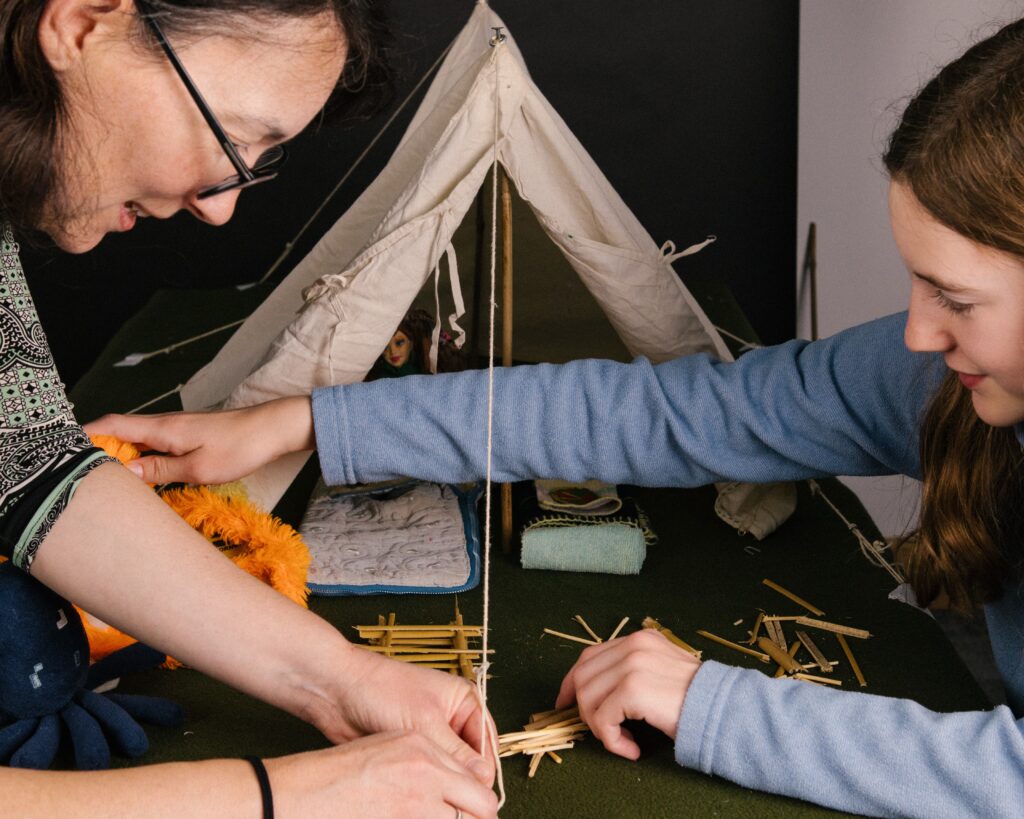
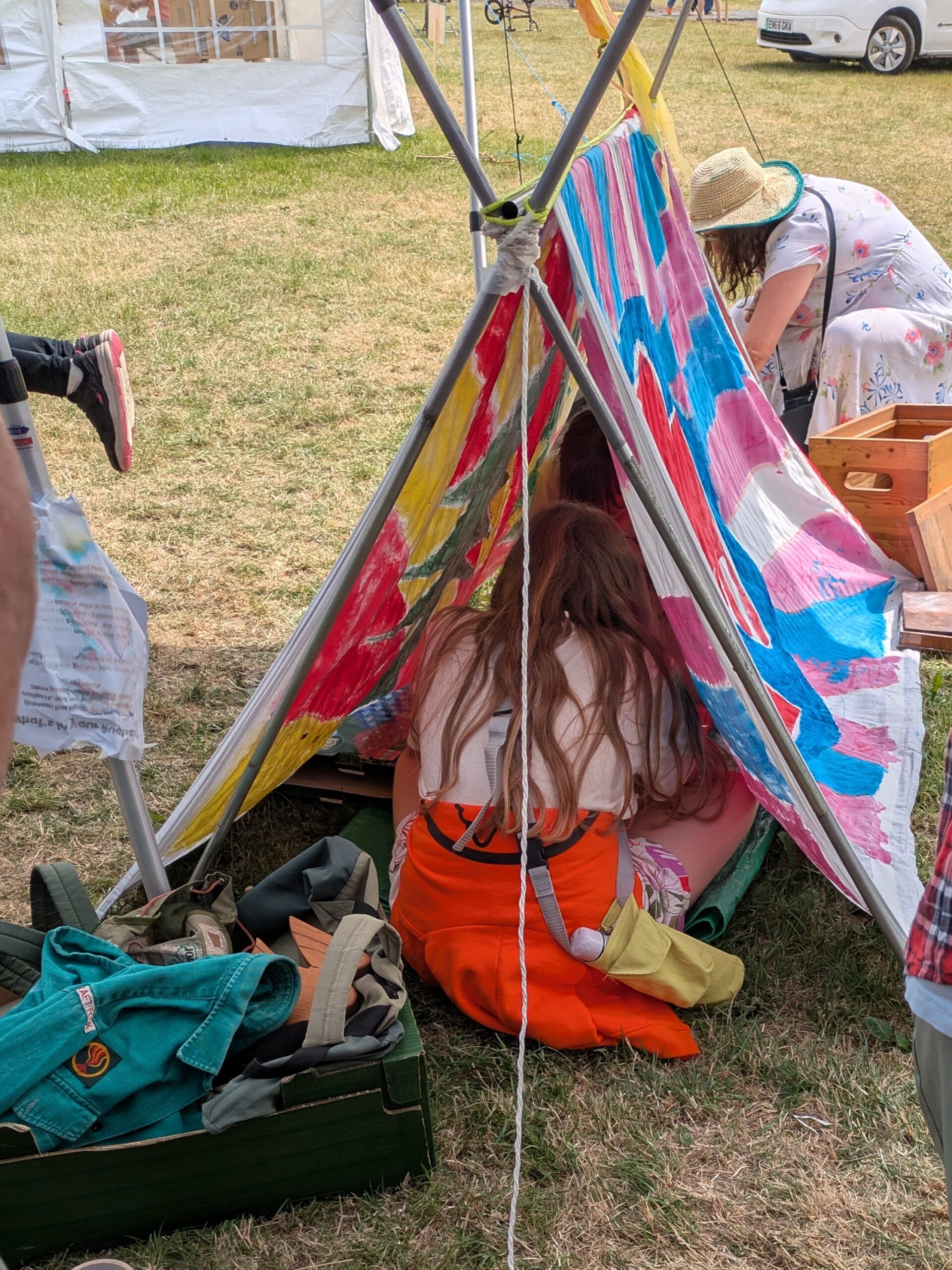
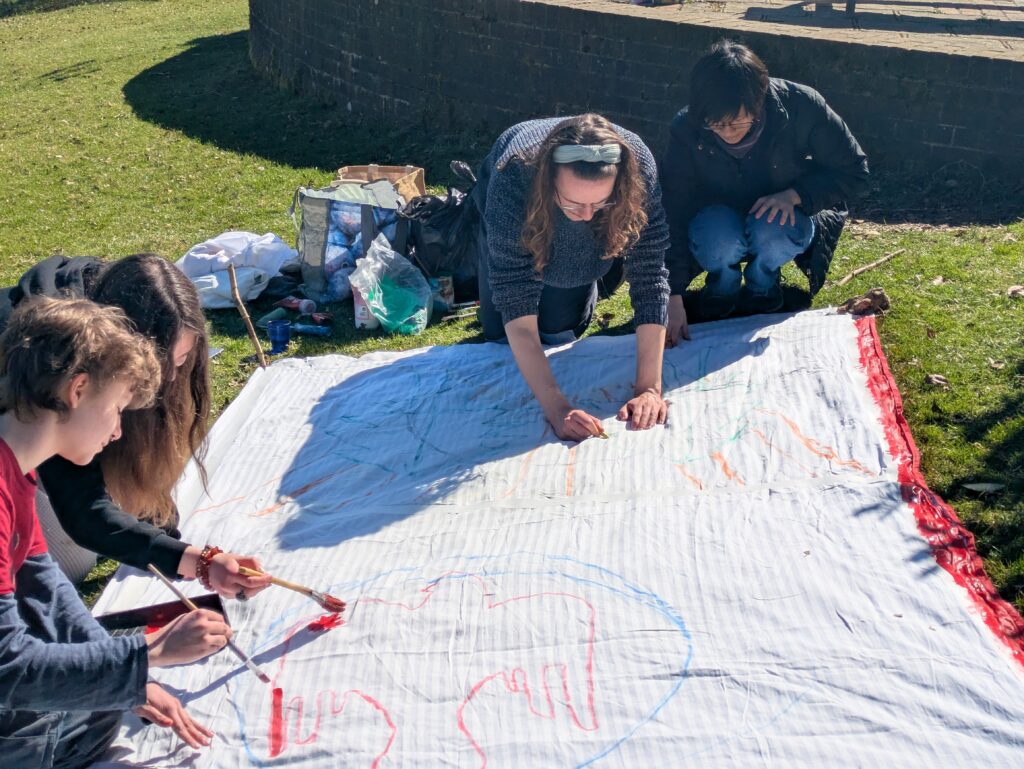
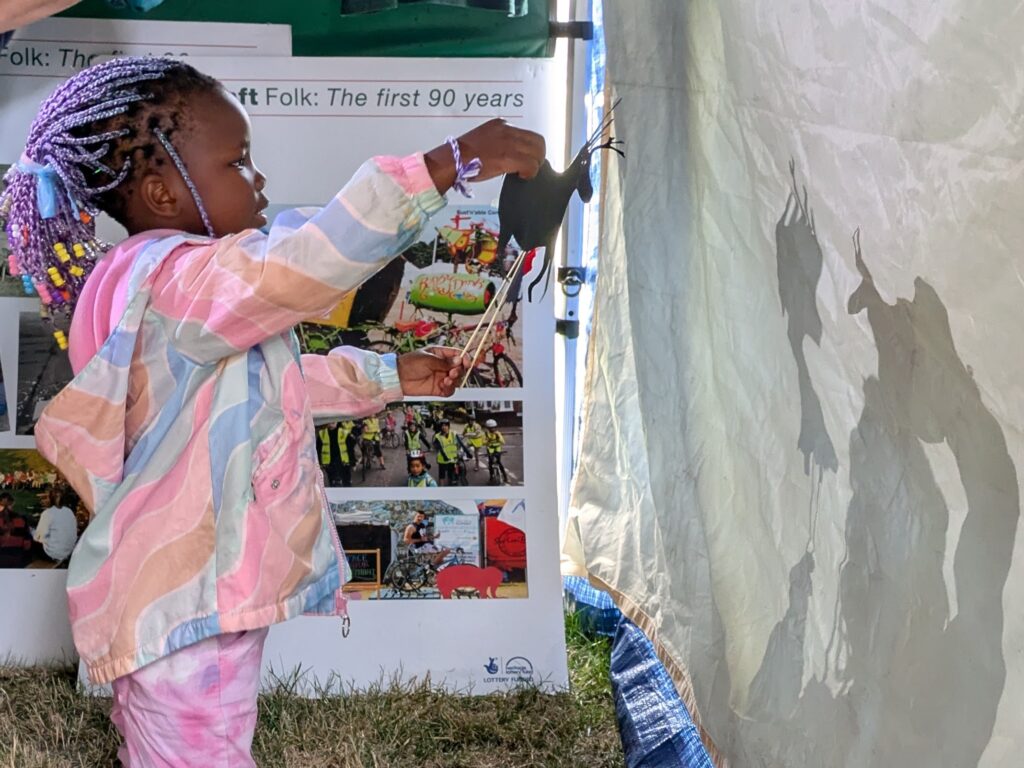
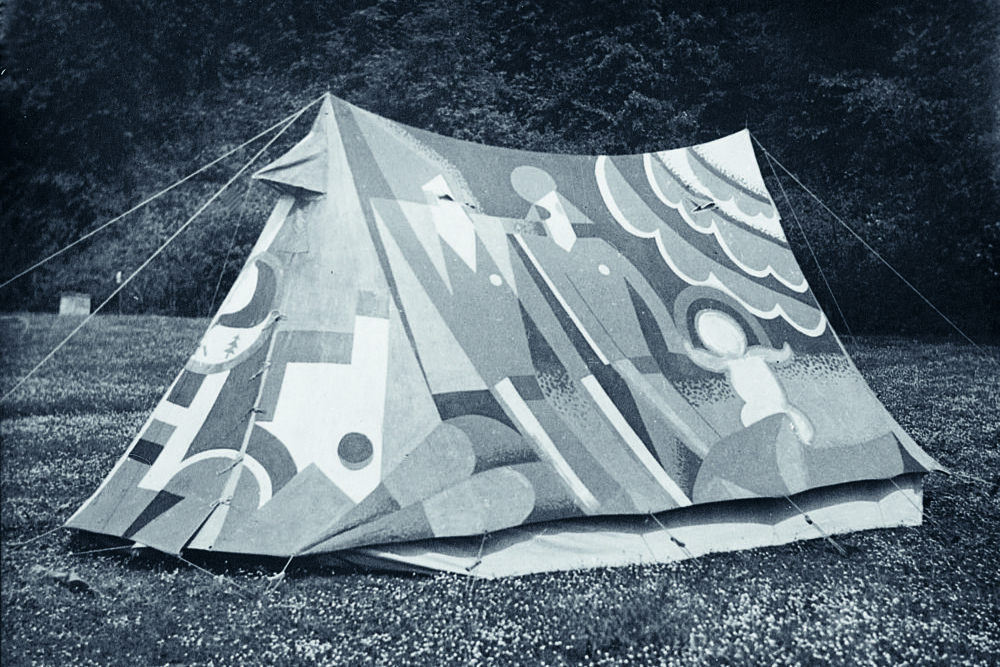
Seeing images of young people active, campaigning, making, and doing, meant the world to our members. From the craft of tent-making to shadow puppetry using old scripts, these activities bridged the gap between ‘then’ and ‘now.’ Young people relate better when they see themselves represented alongside Woodcraft from the past. They recognise both continuity and the positive force for change which young people like them have always embodied.

Radical Continuity
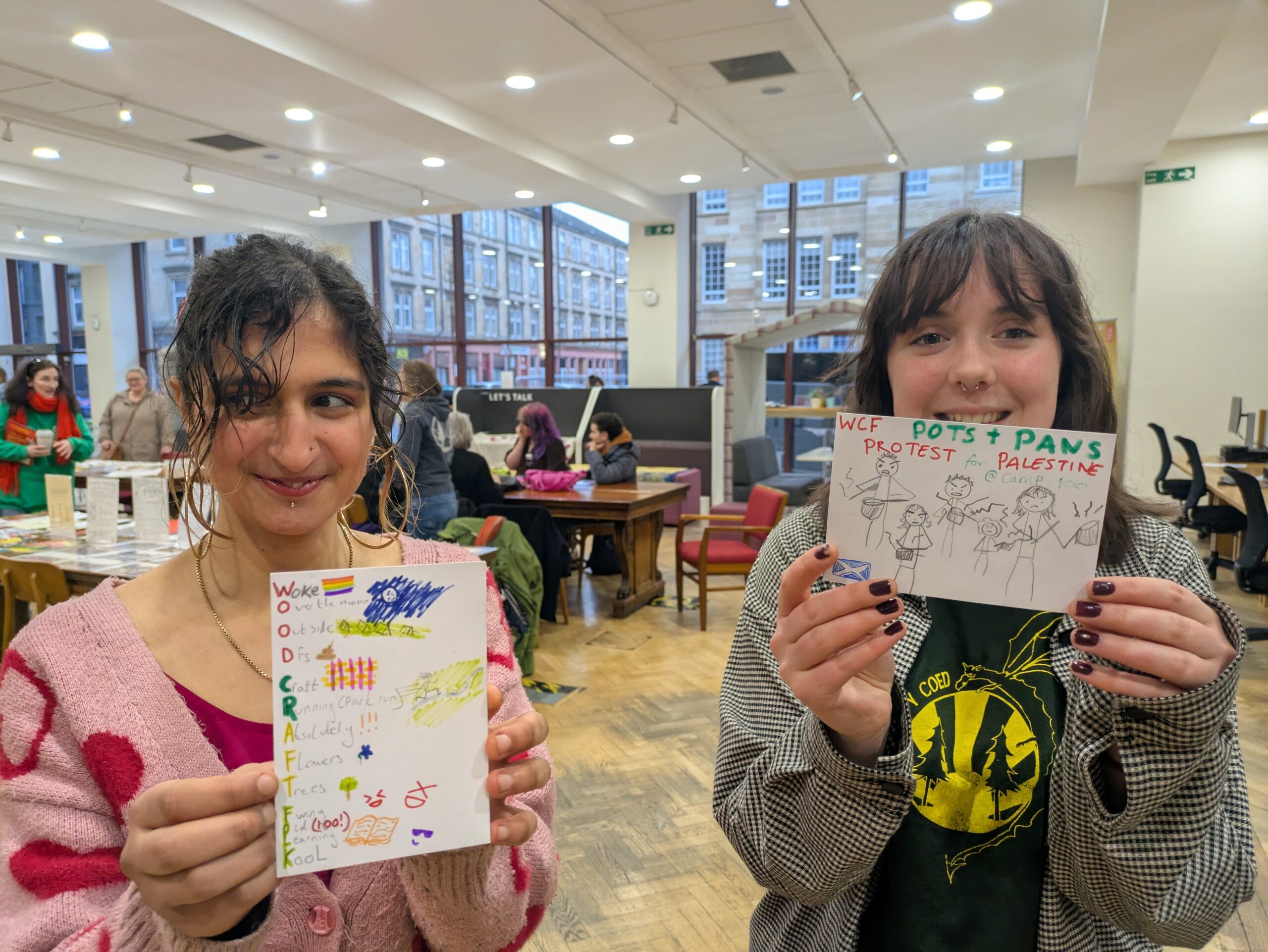
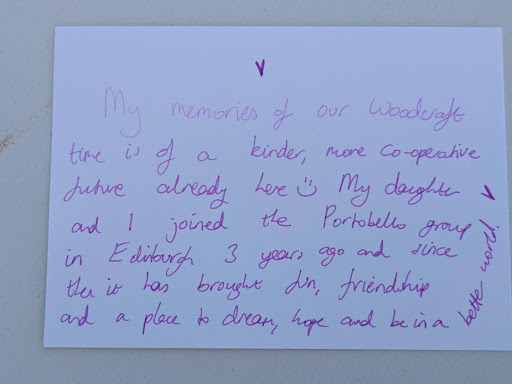
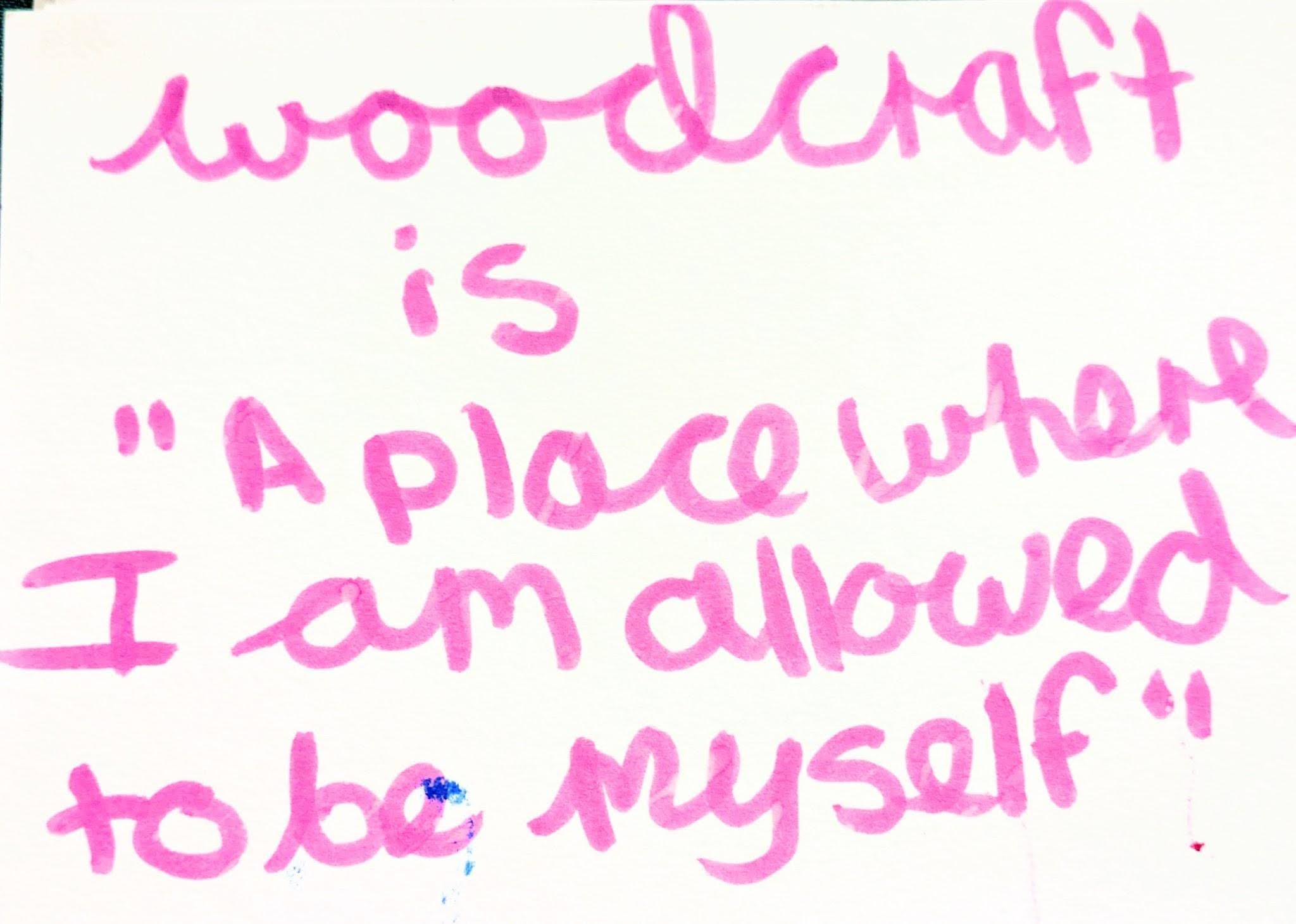
Glasgow District Fellows brought a Rosebank Protest banner used in 2025, displayed alongside Aldermaston Peace Campaigning materials from the 50s and 60s. New audiences were attracted by the display of a transgender flag reflecting the inclusivity and activism of our organisation. It demonstrated our spirit of social justice unchanged over decades. Postcards, mixing images chosen from the archives by young people alongside their photos and artwork all affirmed our values and a deep understanding of the value and impact of young people within our movement.
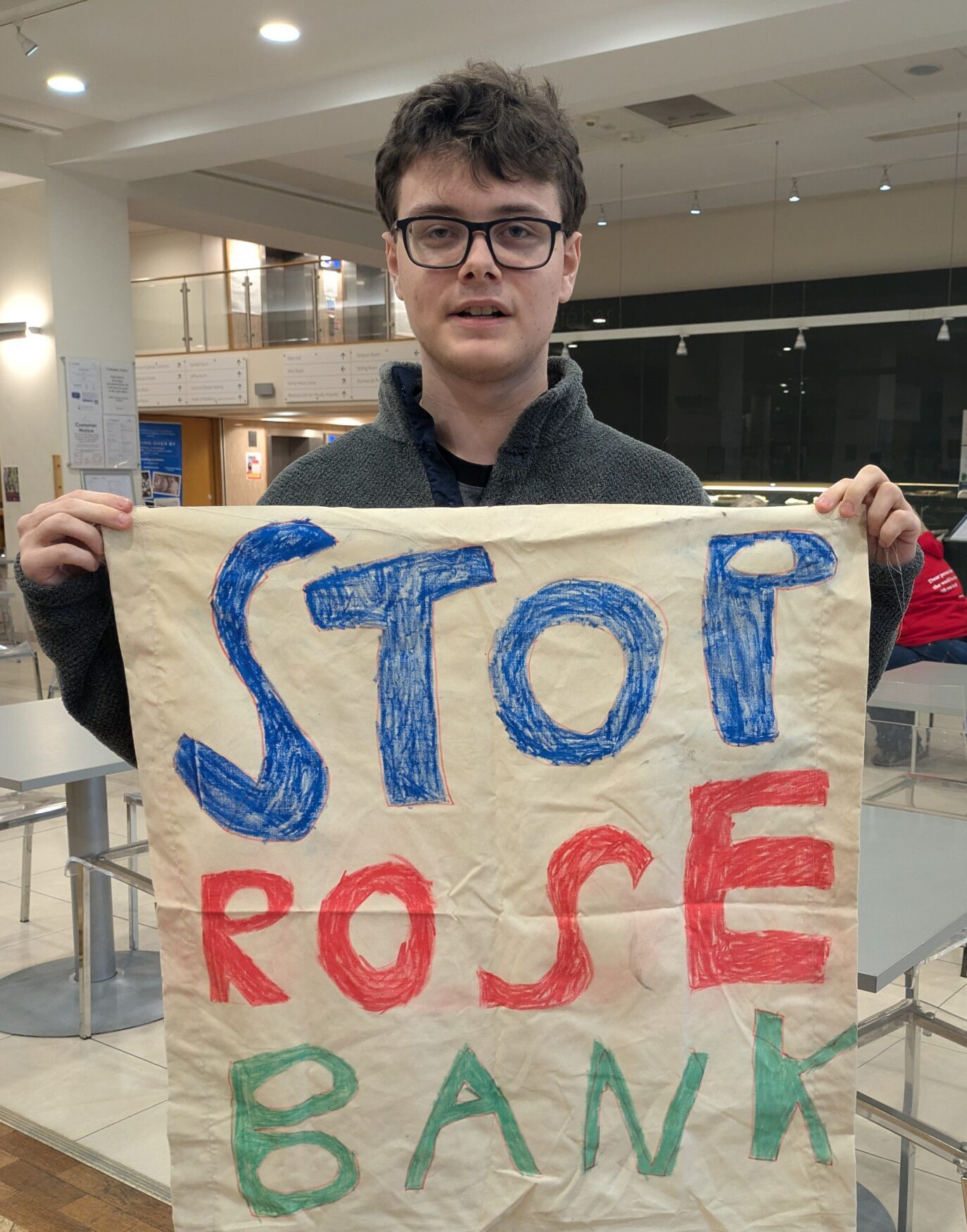
‘This was from nearly ten years ago?’
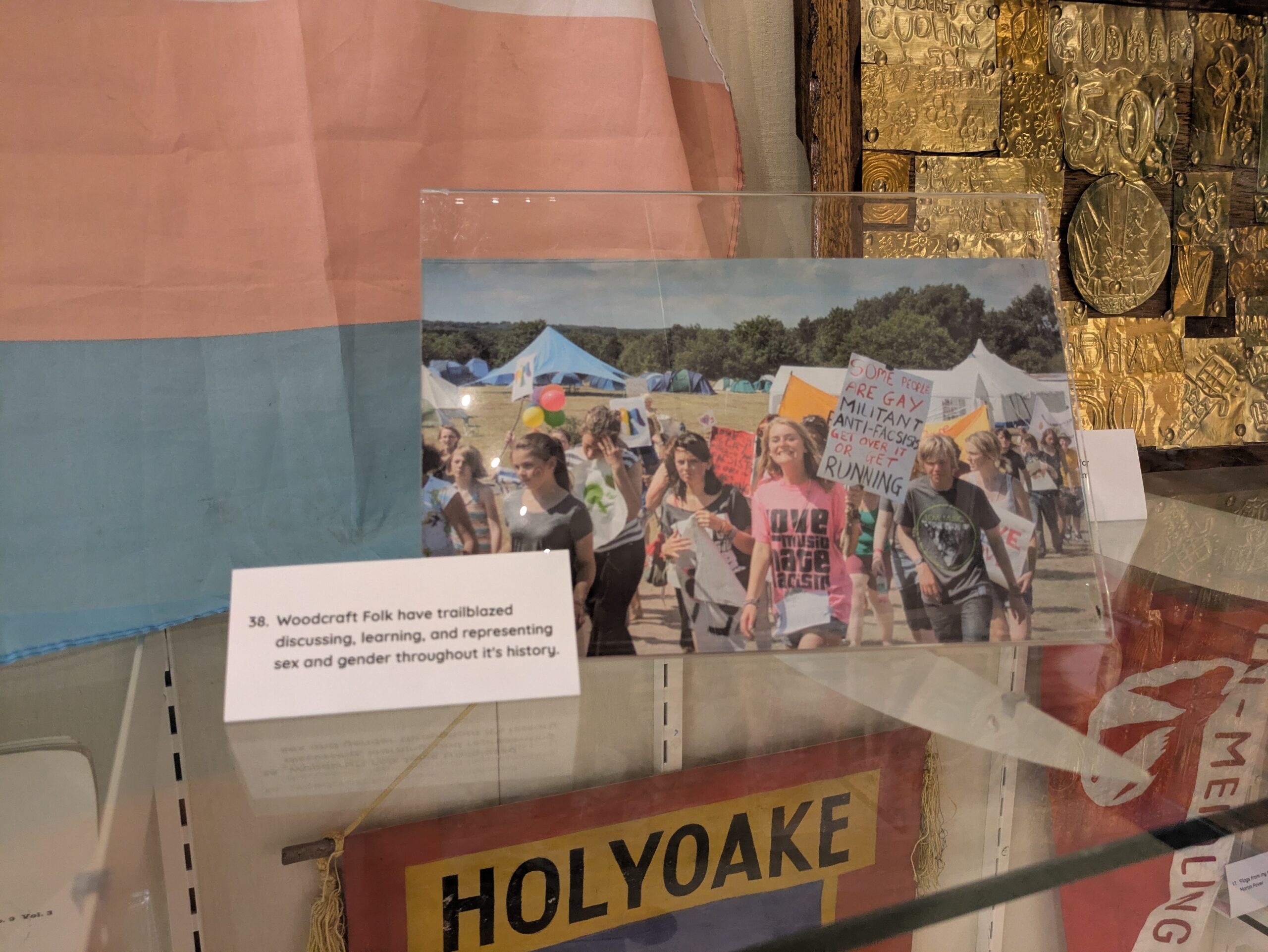
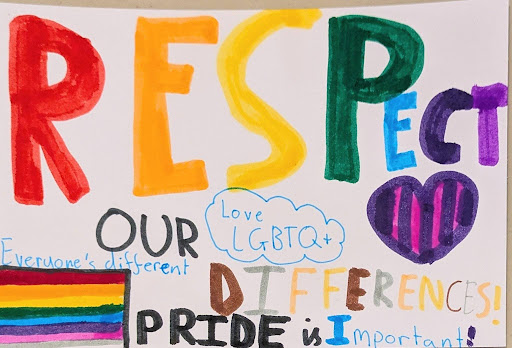
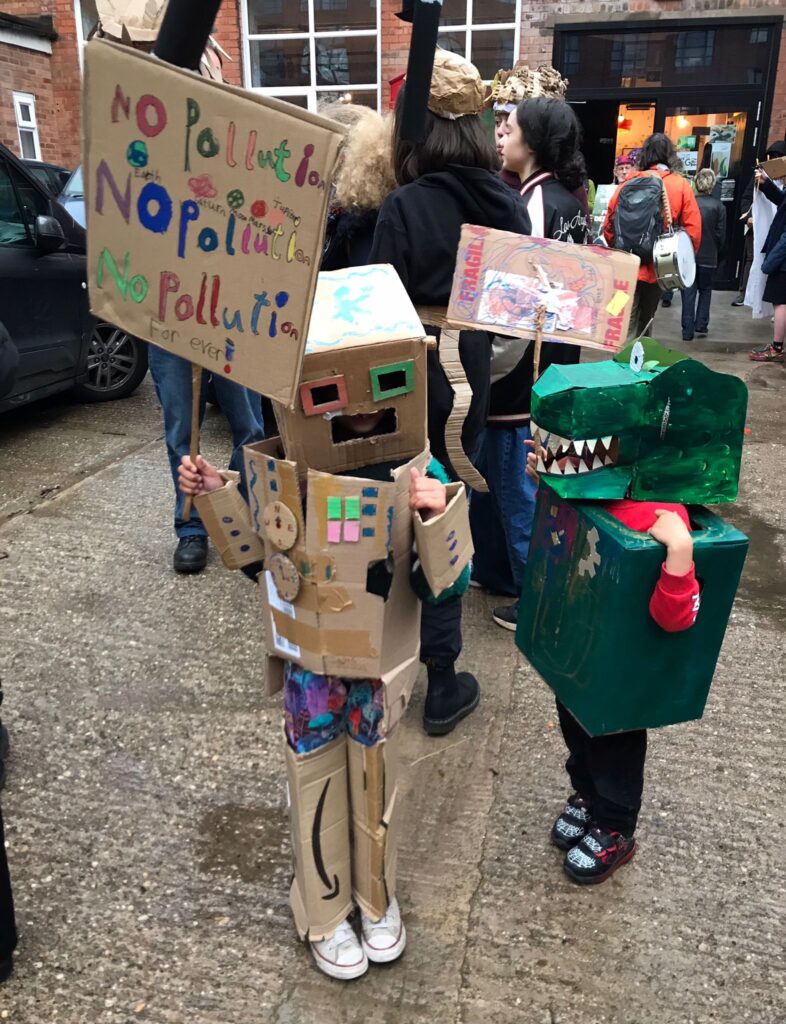
‘Respect for everyone, whoever they are. We call people by the names they want to be called, and it doesn’t matter if you’re a boy, or a girl or whoever you like’
Group and Districts Archives matter
At Camp 100 and over the course of six months of exhibitions, more and more objects and stories were being brought to us by young people and leaders. We’re a grassroots organisation and ‘100 Objects’ included thousands of items including film, t-shirts, badges, photos, all highlighting the need to value and support, document and share our stories within Groups and Districts across the UK. There is clearly a need to support Woodcraft Members to keep living archives accessible where Groups are, linked to other Woodcraft Archives.
The Future: Living Community Archives
Building on these lessons, our next mission is to establish sustainable, youth-led Community Archives. We’re already developing Cudham Woodcraft Archives as a locally based Repository Community Archive. It will house temporarily our 100 Objects Collection, but space will always be limited. We are also creating a digital archive preserving ‘born digital’ material as well as scanned copies of many of our older, more fragile material, to make it more accessible to all.
Some Districts already have potential archive repositories to be a home for Woodcraft Collections locally. For example, The Mitchell Library in Glasgow is a much better collection for Scottish woodcraft banners and paraphernalia, closer to the groups the objects and stories belong to. Contact us for support and advice and we can signpost for all. In Birmingham, I’m going to be continuing supporting interviews and filming with Woodcraft Folk and creating a digital site to link to our other digital resources. In Sheffield and other areas, there are volunteers who may be starting a similar process, and more than anything, we want people to find our stories and build on them.
What we’re doing
We’ll complete systematic conservation, sorting and cataloguing over 1,000 items from our centenary, including regional banners and campaign ephemera. It may take a while! We can support some skills training for professional archiving, cataloguing, website, metadata creation, and digital scanning. Our “Living” Digital Catalogue will be a digital platform to share our “hidden” histories, linking our physical items at Cudham with stories from groups across the UK that can be added to. We’ll signpost to the many Archives, Collections, Districts and Groups organising their own resources and stories. You can help by forwarding any annual reports or other listed collections and images we can share. We can advise and support – contact archive@woodcraft.org.uk. ‘Heritage Exchange’ in any form is something we’d encourage and may be able to support for particular projects, where young people lead recording of oral histories with active young people and older Kinsfolk.
Support Partner Events and Archives
Woodcraft has a long tradition of anti-fascism – there is no surprise we were a stiking presence at the recent Together Alliance event. Young people want to see our history of inclusion, support for climate, refugees, housing anti-poverty, and pacifism. Our movement links through Basil Rawson to the Kinder Scout Mass Trespass, and now Mass Swim and Right To Roam national event in the Peak District, where the National Parks began. Our presence at events led by young people with our partners across the UK is necessary and our members need to showcase and be shown our continuing commitment to these causes and woodcraft values.
Contact Marcus.Belben@woodcraft.org.uk and archive@woodcraft.org.uk