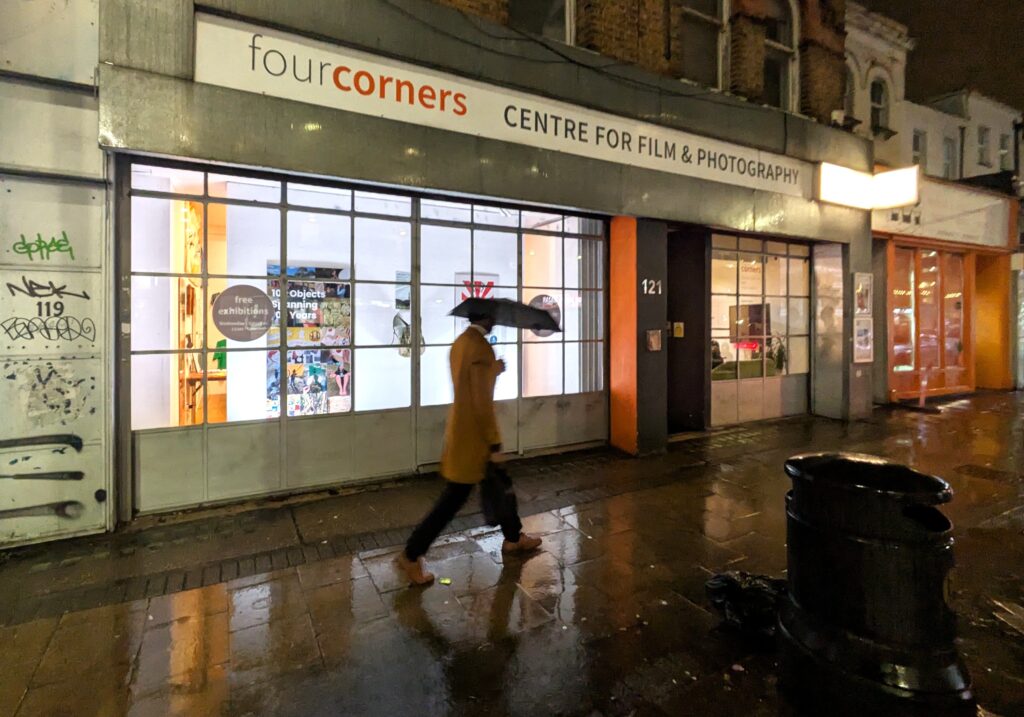
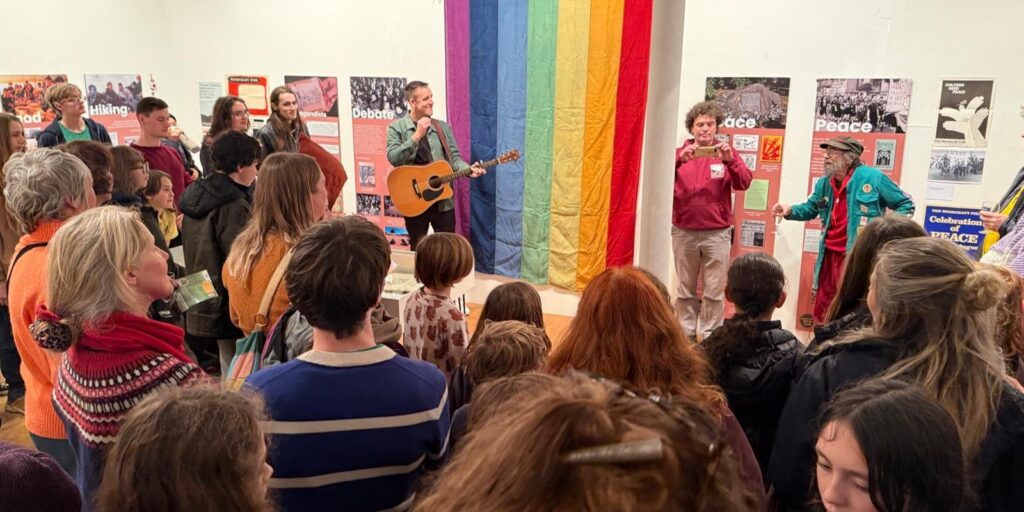
Our ‘100 Objects Spanning 100 Years’ exhibition moves from London to Birmingham, launch event Thursday 5th February 6pm at the Edge.
The timing is perfect as in Stirchley, Birmingham, one of Woodcraft Folk’s newest groups is starting – a woodchips group for children under 6, right where the earliest groups met with the Co-operative in Birmingham in the 1930s.
A “Cradle-to-Grave” Co-operative Legacy
Ten Acres and Stirchley Co-operative Society (TASCOS) and the Woodcraft Folk are closely linked through British Co-operative movement and the Rochdale principles.
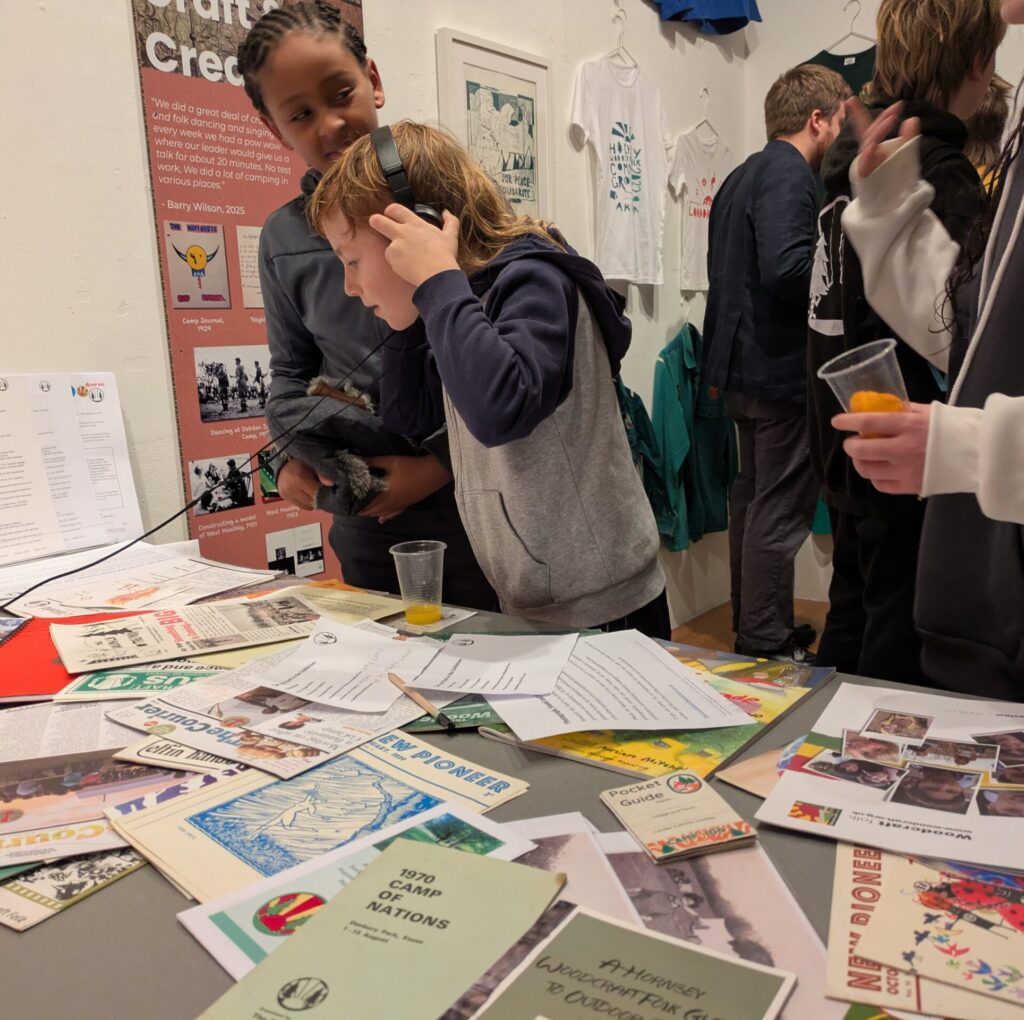
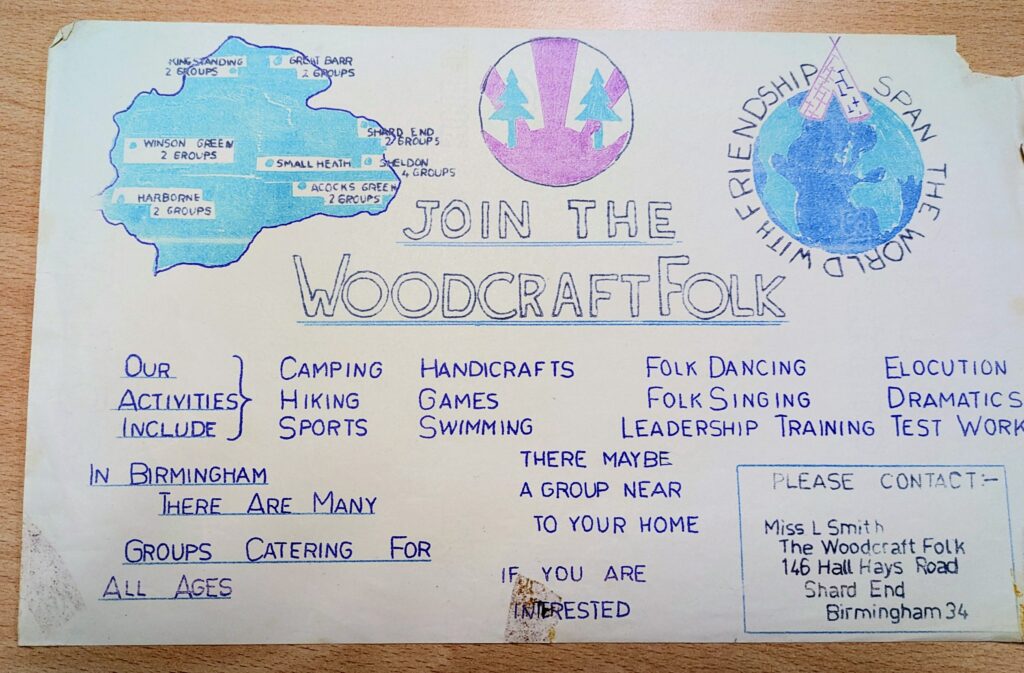
TASCOS was a retail society that shared the “cradle-to-grave” principle of co-operation that was strong in Birmingham. Within Woodcraft Folk Archives at UCL Special Collections, young visitors from Woodcraft Birmingham were surprised to find a map showing seventeen groups peppered across a 1930s map of Birmingham. Early Woodcraft Folk groups were funded or hosted by local Co-operative Societies like TASCOS to provide “co-operative education”.
Coops in Birmingham
TASCOS was one of many Cooperative community hubs in Birmingham providing:
- Meeting Spaces – Woodcraft Folk groups frequently met in Co-operative owned halls or spaces above shops and regional meetings still happen at the Birmingham and Midlands Institute (BMI).
- The Education Dividend – Local societies traditionally allocated a portion of their profits to support Woodcraft Folk. This only transitioned to a national Woodcraft dividend in 2014.
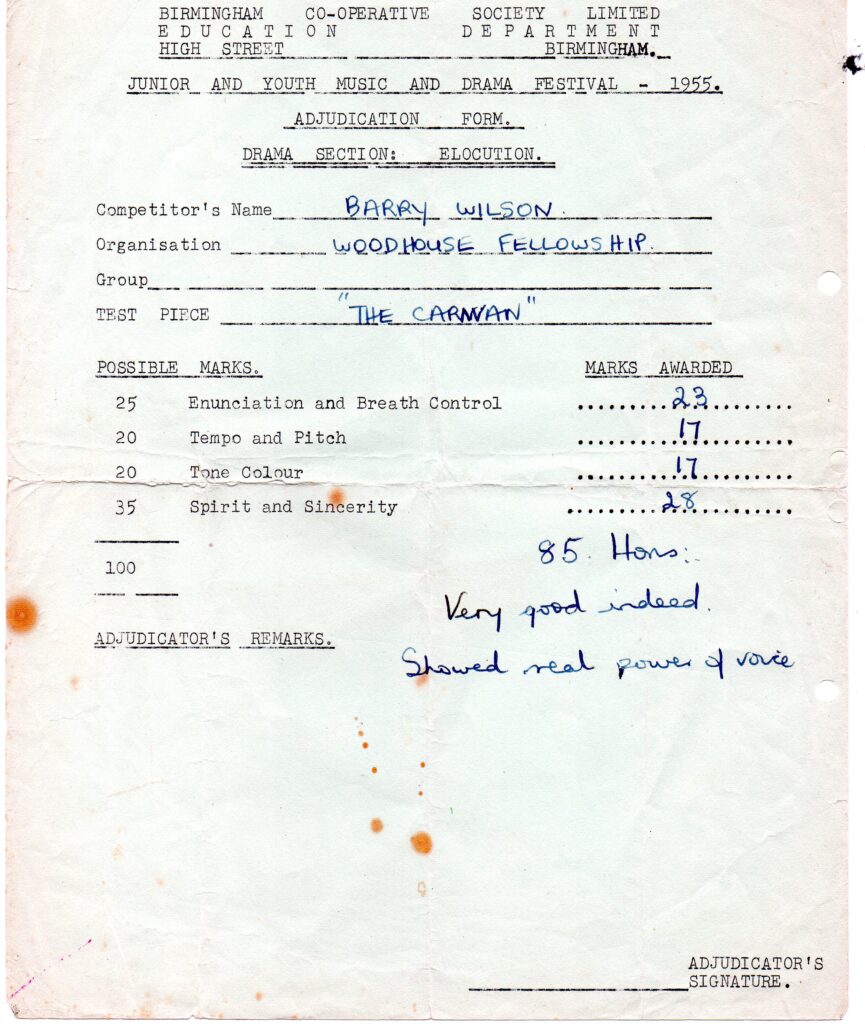
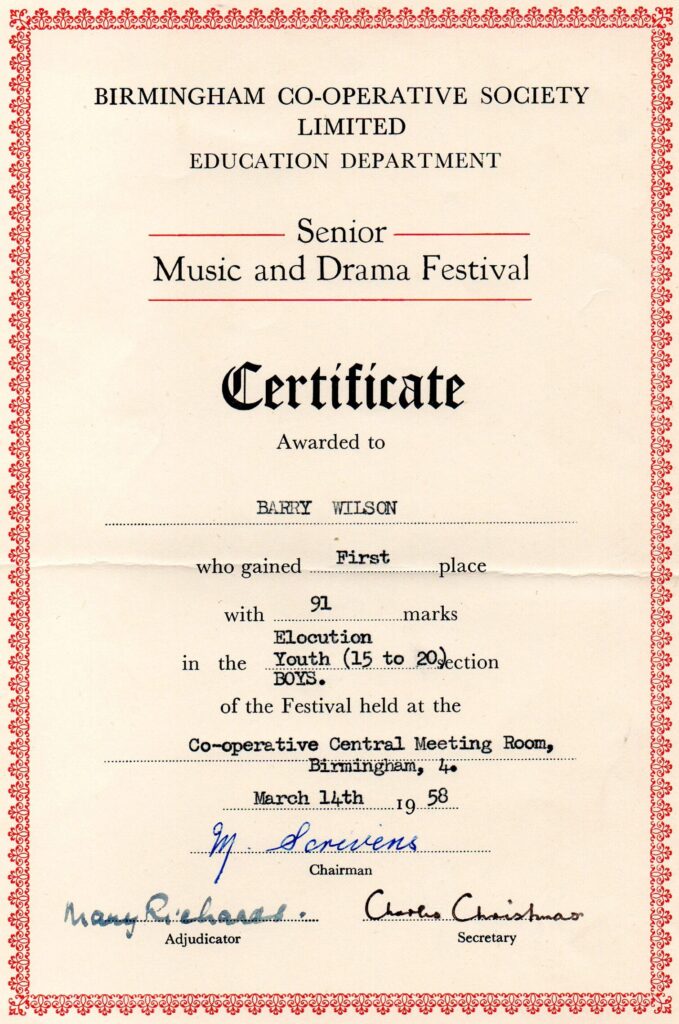
- Education for Social Change – TASCOS had an Education Committee that actively promoted Woodcraft Folk activities as a way to instil co-operative values (equality, peace, and social change) in the next generation and also supported local collaborative festivals (see certificates belonging to Barry, in our exhibition and below).
The BMI itself has historic links with both the Cooperative movement and Woodcraft Folk – Charles Dickens played an important role as an early BMI president, but also hosting his first public reading of ‘A Christmas Carol’ at the BMI to fundraise for the starting of the Institute. He insisted that there were no seats at all to make more room, tickets a quarter of the original price, and only working class people to attend. He spoke for a full 3 and a quarter hours:
” …he took his place by the big arm chair, looking so pleasant, with a smile breaking through his moustache… he told them how they might laugh as much as ever they liked, and have a good cry too, if their inclination led them in that direction, as he liked nothing better than sympathy.” (Birmingham Journal, 31st December 1853).
Radical Roots – George Holyoake and Robert Owen
We met John Boyle, Coop Senate, this year, who loaned two valuable banners from Birmingham Cooperative painted by local Woodcraft Folk members and a part of our exhibition. The most profound historical link is through George Jacob Holyoake (1817–1906), a Birmingham-born giant of the Co-operative movement.
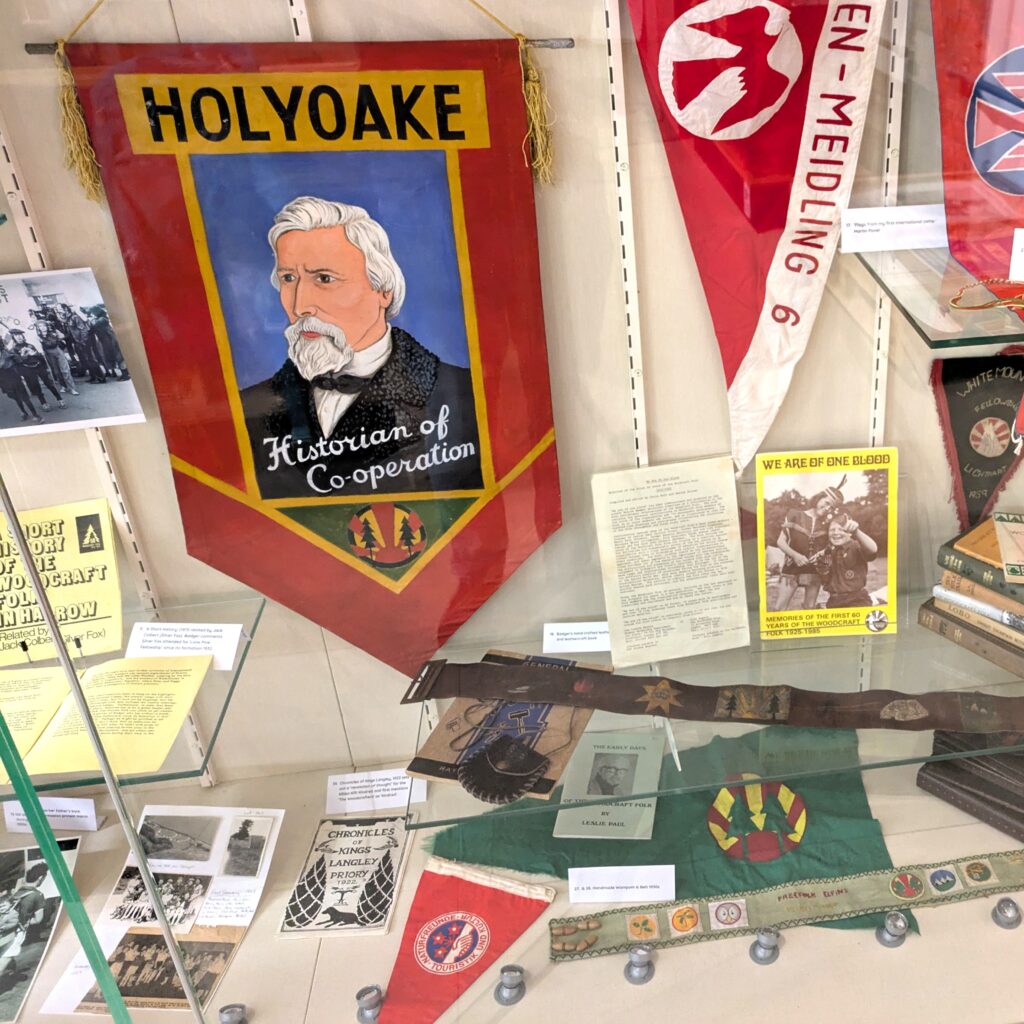
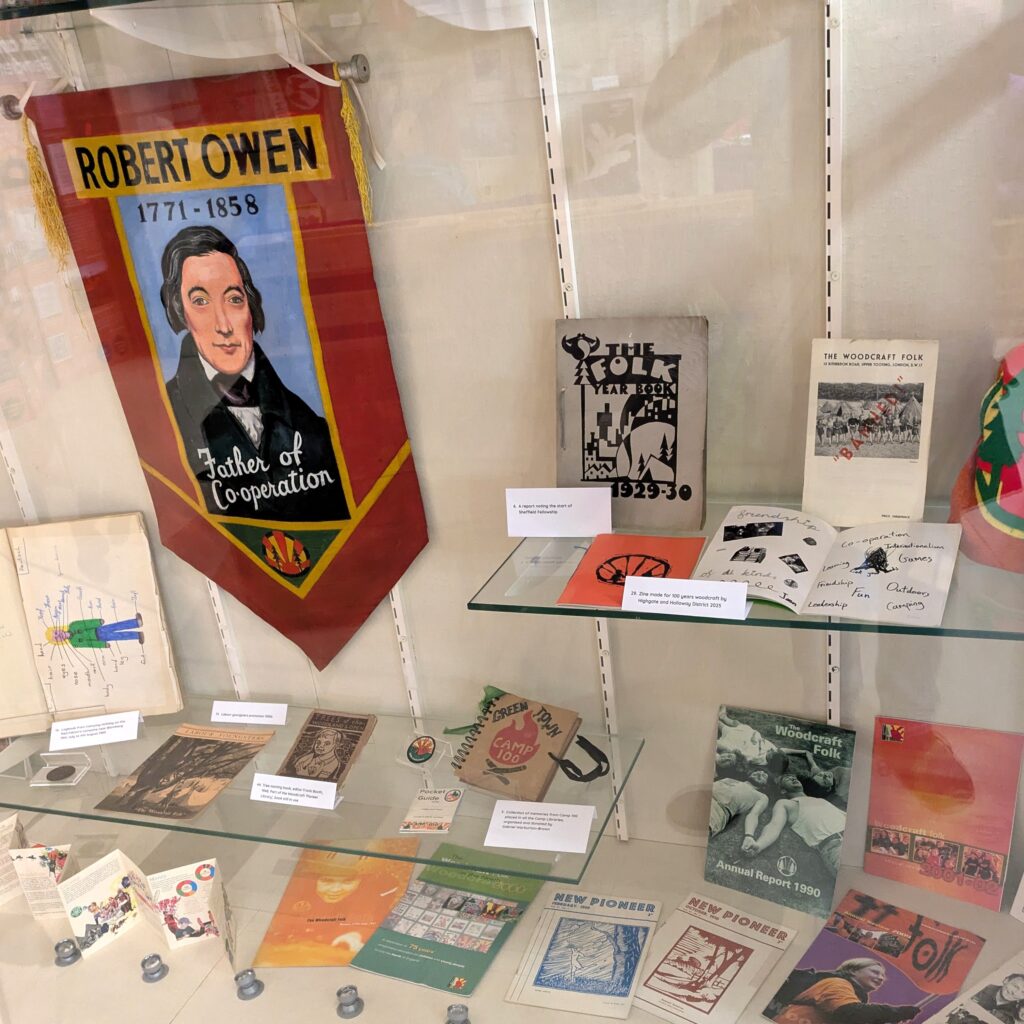
George Holyoake had started work in a foundry in Birmingham at 8 years old. At 18 he attended lectures at the BMI where he discovered the socialist and co-operative ideas of Robert Owen. He eventually became a part-time assistant lecturer at the Mechanics’ Institute (part of BMI). Rejected from a full-time teaching post because of his radical socialist views, he went on to write The History of the Rochdale Pioneers and left a massive co-operative legacy leading to Holyoake House in Manchester – still the registered address of the UK movement today.
Visit the Exhibition
Discover how woodcraft Folk has led a century of “Education for Social Change”, spanning the world with friendship. To book your place at the launch event or to visit the exhibition, please contact Marcus marcus.belben@woodcraft.org.uk.